

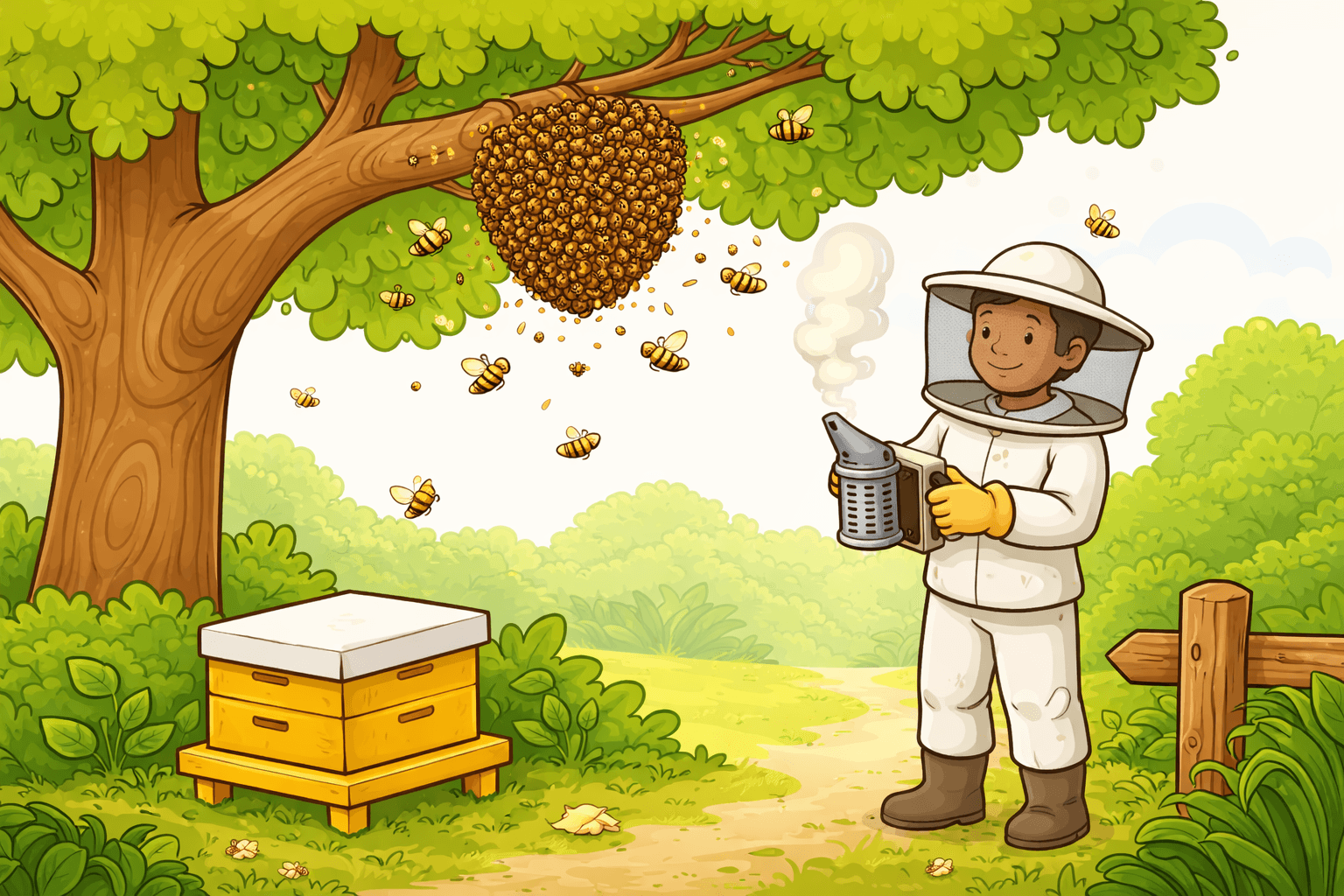
Spotted a Swarm of Bees?
Don't panic, and don't spray! Report it to us and a local beekeeper will come relocate them. Please keep your distance until they arrive.
Report a SwarmWhat Makes a Good Swarm Report?
A great report helps us respond faster and show up with the right equipment. Here's what we need from you.
Two Photos
A distance shot and a close-up tell us the height, size, and whether they're honey bees.
Location
GPS from your phone, coordinates from the photo, or just a street address. Whatever is easiest.
Contact Info
A phone number so the beekeeper can call when they're on their way.
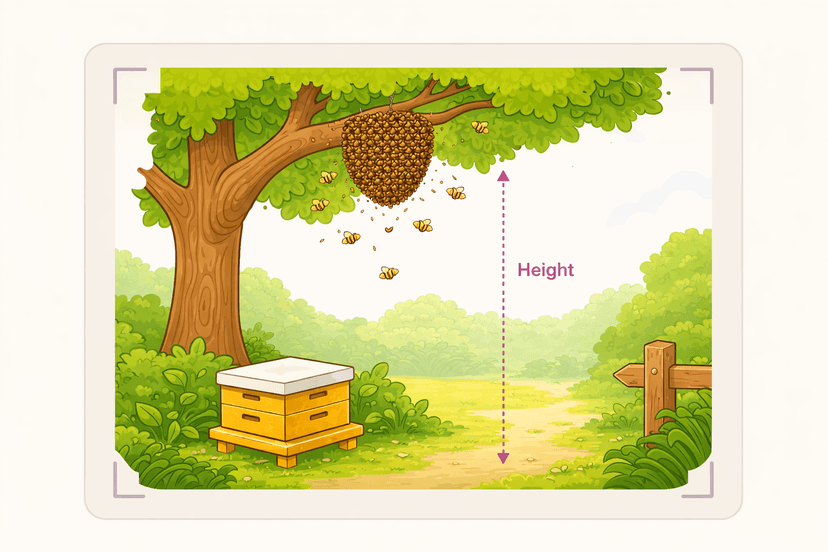
The Distance Shot
Step back far enough to capture both the swarm and the ground in a single frame. This is the most helpful photo you can take. It tells us roughly how high the swarm is so we know what ladder or lift to bring.
- Show the swarm and the ground in one frame
- Include a reference object if possible (fence, person, car)
- If you know the height, you can tell us in the form
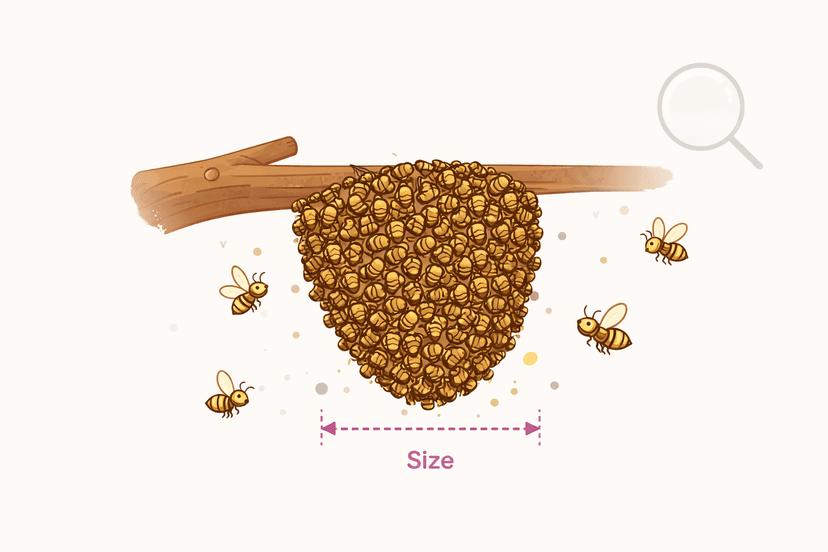
The Close-up Shot
If you can do so without putting yourself at risk, get a closer photo. This helps us confirm they're honey bees (not wasps) and gauge the cluster size so we know whether to bring a small box or a large one. Your safety comes first. Use phone zoom if you prefer to keep your distance.
- Never approach a swarm closer than you feel is prudent
- Phone zoom is fine if you can't get close
- Helps us tell honey bees from wasps or hornets
What Happens After You Report?
We review your report
A volunteer checks the photos to confirm it's a honey bee swarm and assesses the equipment needed.
A beekeeper heads your way
They'll call you when they're en route. During swarm season this is usually within a few hours.
Free relocation
The beekeeper will carefully collect the swarm and give them a new home in a managed hive. No cost to you.

While You Wait
A few things to keep in mind after you've submitted your report.
Keep your distance
Stay at least 15-20 feet away. Any bee colony can sting if disturbed. Always give them plenty of space.
Don't spray them
Pesticides kill pollinators and can make bees more defensive. Let a beekeeper handle removal.
Pets & kids inside
Bees can sting when provoked. Keep children and pets away from the swarm until a beekeeper arrives.
They may move on
Swarms can relocate on their own. If they leave, please let us know ASAP so we can notify the beekeeper. They may be driving 30+ minutes to reach you.
Submit Your Report
Fill in what you can. Photos and location are most important.
Frequently Asked Questions
Common questions about bee swarms and our collection service.
How do I know if it's a honey bee swarm?
Honey bee swarms form a cluster (often basketball-sized or larger) hanging from a branch, fence, or structure. The bees are golden-brown and fuzzy. If bees are going in and out of a wall or structure, that's an established colony, not a swarm, and may need different handling.
What if they're wasps or hornets?
Our beekeepers specialize in honey bees. If you have wasps, hornets, or yellow jackets, you may need pest control. Not sure? Submit a report with a photo and we'll help identify them.
Is there a cost for swarm collection?
No. Swarm collection is a free community service. Our beekeepers volunteer their time.
What about bees inside a structure (walls, soffits, etc.)?
Structural removals (cutouts) are significantly more labor-intensive and are typically a paid service. That said, please don't spray them. Killing a colony inside a wall leaves behind honeycomb that will rot, attracting roaches, ants, mice, and other pests. You'd be trading one problem for a worse one. Report it through the form and note the situation. We'll connect you with beekeepers in our network who offer cutout services.
What area do you cover?
We serve the greater Joplin area including Webb City, Carl Junction, Carthage, Neosho, and surrounding communities.
What happens to the bees?
The swarm is placed into a managed hive and cared for by the beekeeper. They'll contribute to local pollination, which is a win for the bees and the community!